Make APIs, data, background work, and recovery paths easier to trust.
Simulation only. It does not touch a database, queue, cloud account, or production service.
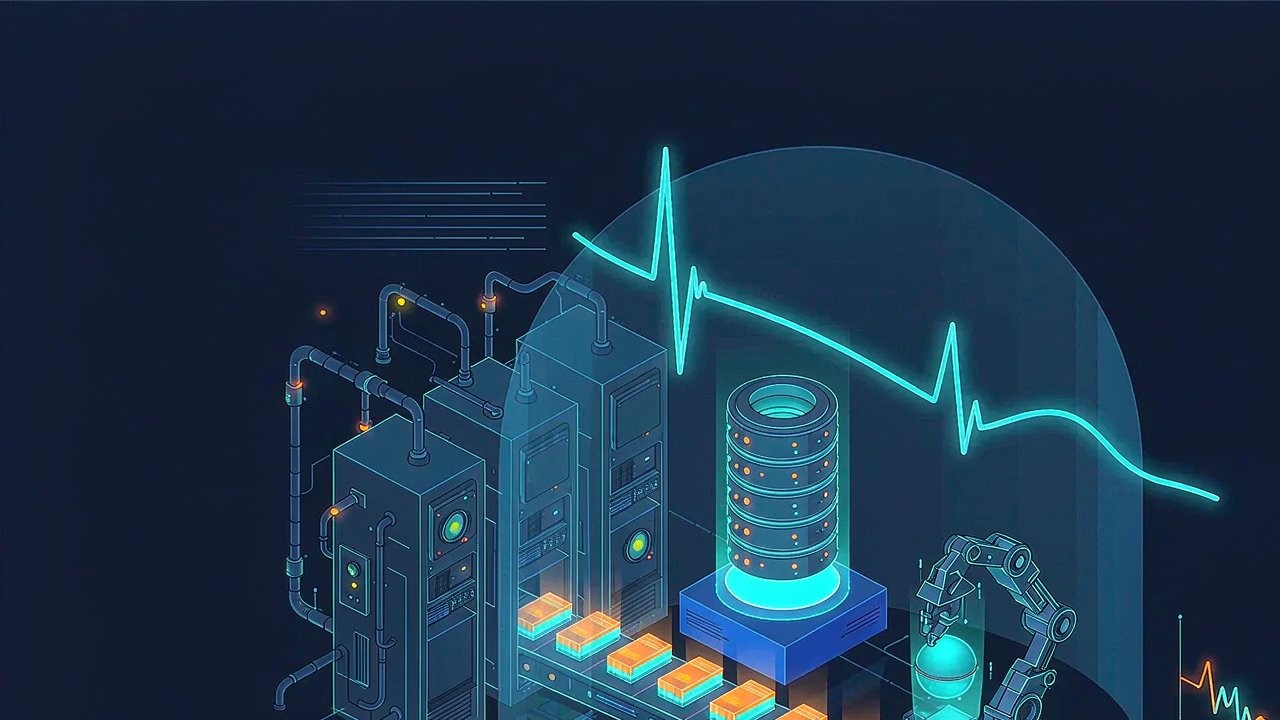
Backend overview / plain-languageConcept illustration: the system under observation and protection.
Problem
A backend is more than a happy-path endpoint. Reviewers need to see authentication boundaries, durable state, worker behavior, readiness signals, and what a recovery or rollback rehearsal can actually prove.
Approach
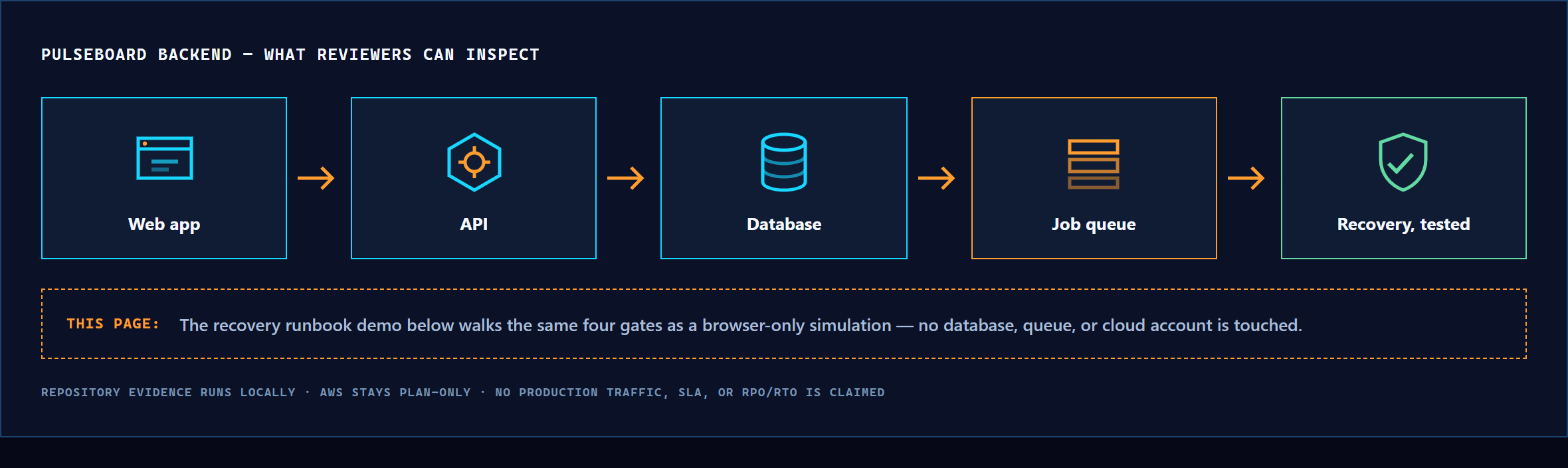
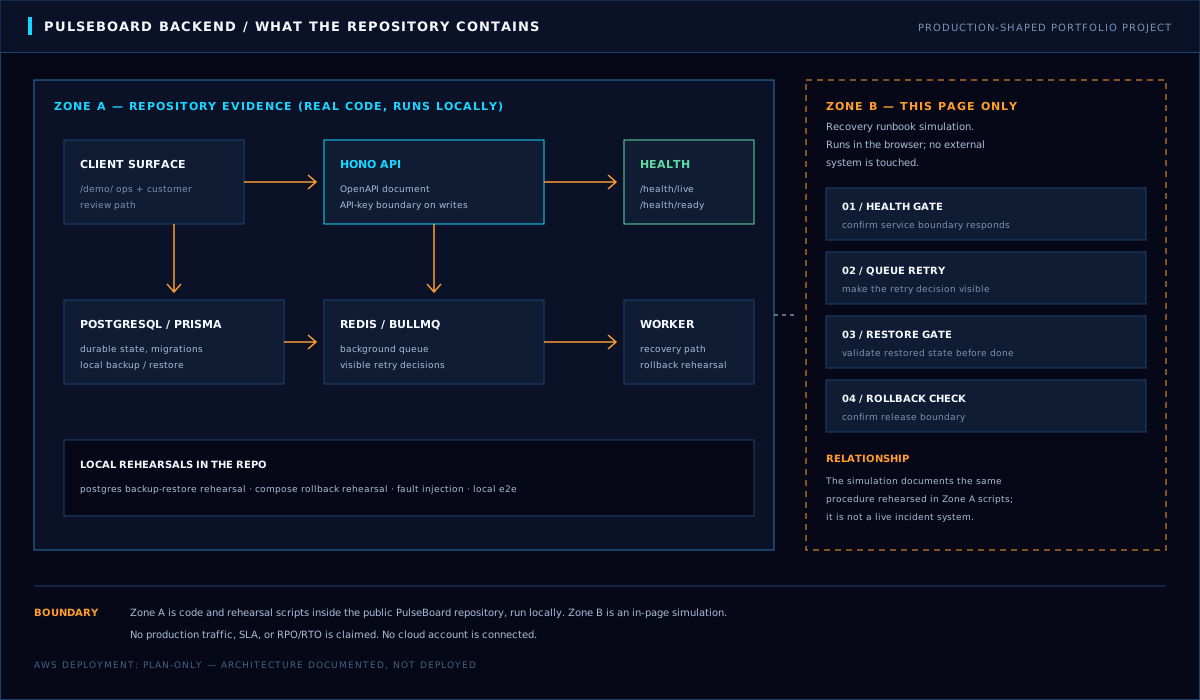
PulseBoard is the real evidence anchor: a production-shaped portfolio project with a Hono API, PostgreSQL and Prisma, Redis and BullMQ, API-key boundaries, OpenAPI, liveness/readiness, worker recovery, and local backup/restore and rollback rehearsals.
Proof
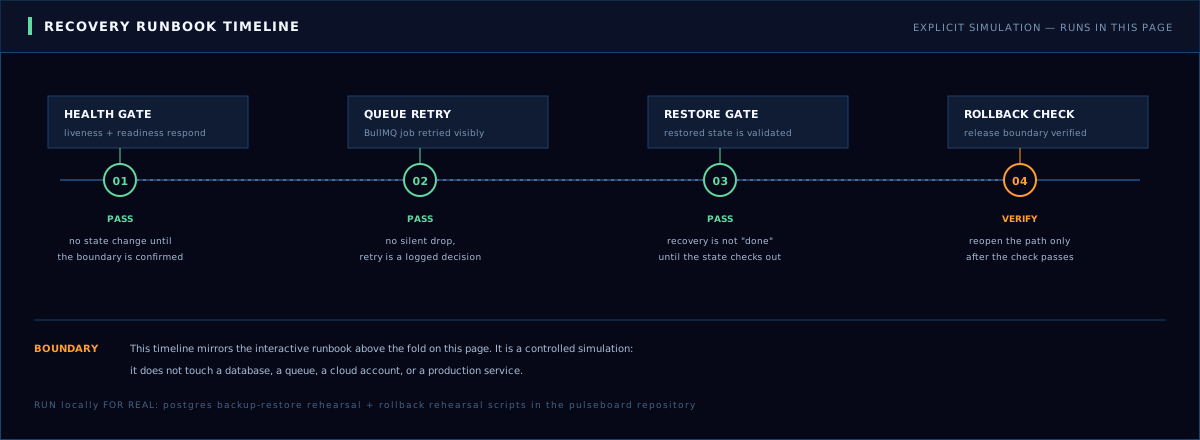
The demo below is an explicit simulation of an operational runbook. It walks through health checks, queue retry, a restore gate, and rollback verification so the distinction between a documented procedure and a live production claim stays visible.
Limits
The simulation is not a live incident system and does not establish production traffic, SLA, RPO/RTO, or a successful remote deployment. AWS remains plan-only in the current evidence boundary.
Product walkthrough
What it looks like in use
Real states of the interactive demo below: what a reviewer sees when the flow succeeds and when it fails.
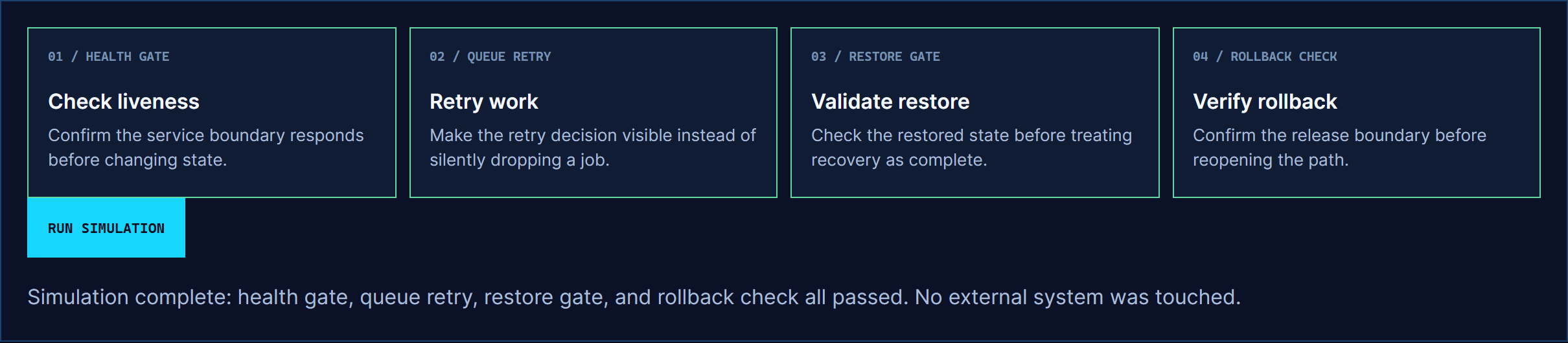
Simulation state / all gates passedThe simulation's completed state, as rendered by the interactive demo on this page.
Interactive / Explicit reliability simulation
Recovery runbook: step through a controlled simulation
Simulation only. It does not touch a database, queue, cloud account, or production service.
01 / HEALTH GATE
Check liveness
Confirm the service boundary responds before changing state.
02 / QUEUE RETRY
Retry work
Make the retry decision visible instead of silently dropping a job.
03 / RESTORE GATE
Validate restore
Check the restored state before treating recovery as complete.
04 / ROLLBACK CHECK
Verify rollback
Confirm the release boundary before reopening the path.
Ready. No external system will be touched.
For detailed review
Engineering diagrams
Denser diagrams of the same boundaries, for reviewers who want the full structure.
Evidence vs simulation zonesZone A is repository evidence; Zone B is this page's browser-only simulation.Recovery runbook timelineFour gates, each with an explicit pass condition before the next step runs.
Continue the review
Bring the existing codebase, constraint, or failure path.
This page demonstrates a bounded working method. The next step would be to inspect the actual repository and agree on the smallest verifiable slice.